Part 2: The Invisible $50,000 And Why We Waited a Year to Do It Right
In my last post, I shared that our 728 sq. ft. basement remodel cost $107,000. Today, we’re looking at the "unsexy" half of that number.
Nearly 50% of our budget went into things that are currently hidden behind our drywall. If you’re someone who already has a lot going on in your life, this is likely the most important post you’ll read. Why? Because while a pretty bathroom might be what sells a house, it’s the infrastructure that actually allows you to enjoy the house. When your life is already full, the last thing you want is a beautiful space that functions poorly or requires constant repairs because the 'unsexy' essentials were ignored.
The HVAC Saga: Dealing with Asbestos and the "Soffit Trap"
The biggest line item in our budget was $25,774 for HVAC and a new boiler. In fact, this expense was so significant that it delayed our entire remodel by a full year.
Why did we wait? We knew this was our "forever home," and we refused to take shortcuts. The basement had two major issues:
Asbestos: The old heating pipes for our upstairs radiators were wrapped in asbestos.
Ceiling Height: Those pipes sat below the structural beams. Most contractors would suggest building "soffits" (those drywall boxes that drop down from the ceiling) to hide them. As a designer, I knew that low ceilings make a basement feel like, well... a basement.
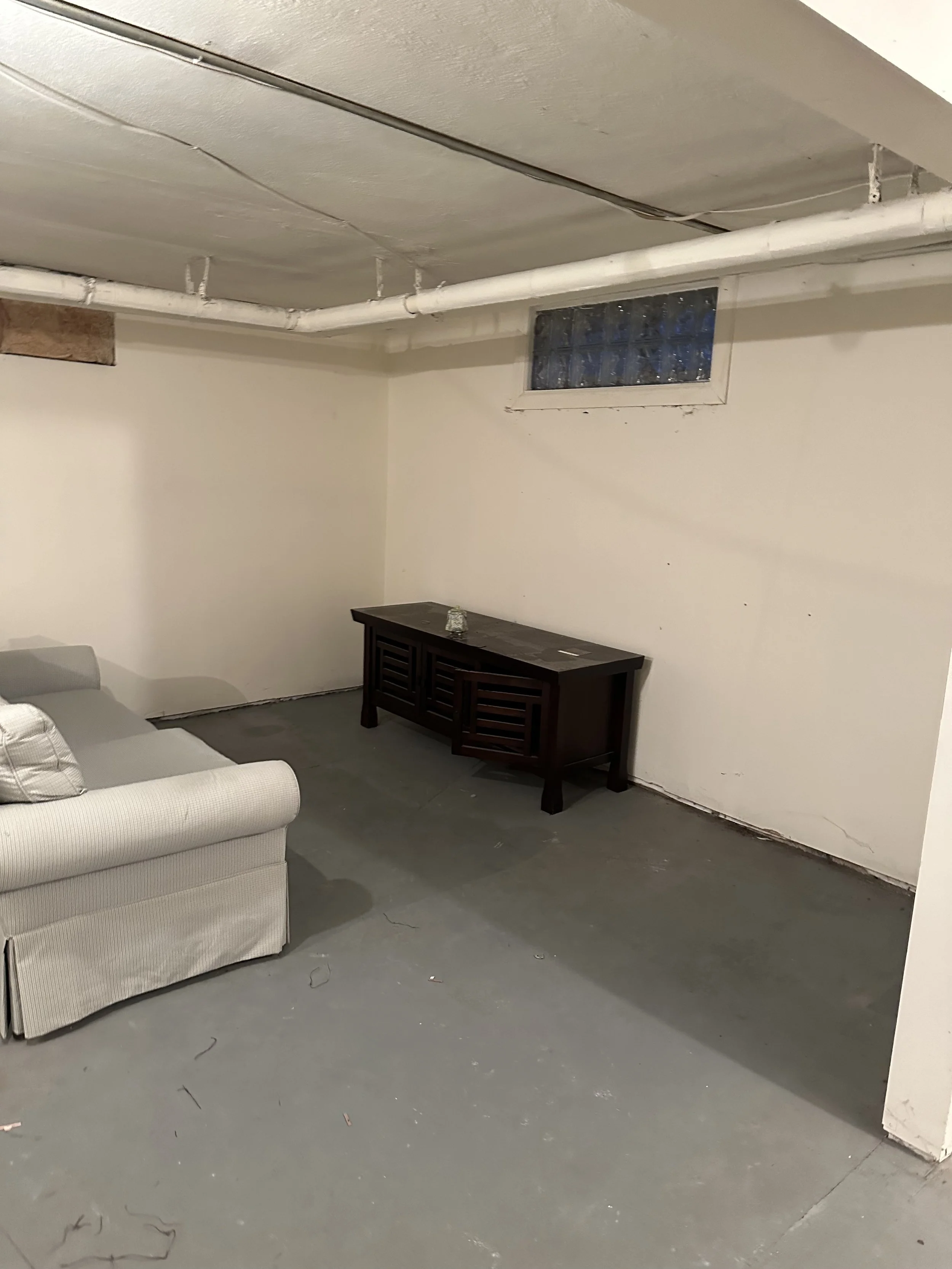
We wanted the ceilings as high as possible. That meant a total repipe of the house, asbestos remediation, and, on the advice of every pro we talked to, upgrading to a high-efficiency boiler to support the new basement radiators. It was a massive pill to swallow, but it’s the reason our basement feels like a natural extension of our main floor today.
Plumbing: More Than Just a New Toilet ($13,625)
When people think of plumbing costs, they think of the new sink or shower. But for us, the $13,625 plumbing bill was about Layout Efficiency. To create a floor plan that actually flowed, we had to do the heavy lifting:
Breaking Concrete: We had to jackhammer the basement floor to bury the new lines for the bathroom and the convenience wet bar.
Relocating the "Mess": We moved vent pipes in the laundry room and relocated existing plumbing from the main floor powder room that was hanging awkwardly into our new living space.
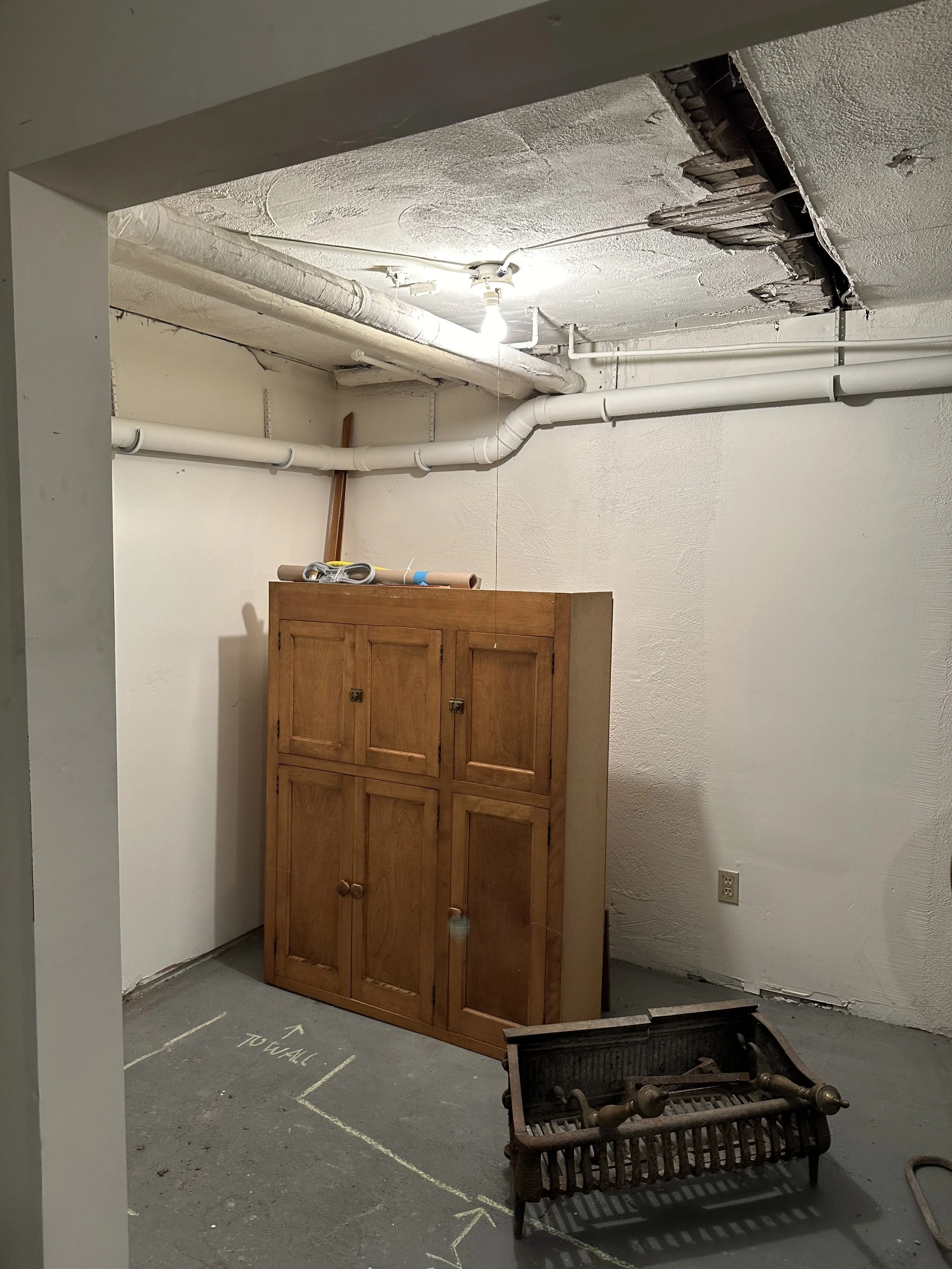
Designing a bathroom is about so much more than selecting pretty tiles and a vanity. For this project, the real work happened underground. Before we could even think about finishes, we had to manage the complex logistics of breaking the concrete floors to bury new lines and relocating hanging pipes to maximize our ceiling height. It’s the invisible work that makes the beautiful work possible.
Electrical & The "Light" Factor ($7,925)
We invested nearly $8,000 in electrical, and it wasn't just for the new suite and wet bar. We used this opportunity to add comprehensive lighting and power throughout the entire 728 sq. ft. Basements are notoriously dark; by planning a full lighting grid and ensuring we had power exactly where we needed it (including those crucial heated bathroom floors), we ensured the space would be as bright and functional as our main floor.
The Supporting Cast
Radon Mitigation ($2,075): Non-negotiable for a safe family space.
Insulation ($3,305): Because a basement is only as good as it is warm.
The Lesson for Busy Families: Infrastructure First
If you are managing your own budget, the temptation to spend on the "pretty stuff" first is real. But as a professional, here is my advice: Wait if you have to. We waited a year to start this project because we knew that if we didn't fix the HVAC and the ceiling height correctly, no amount of high-end furniture would make us love the space.
Managing this stage is where the "400 hours" I mentioned in Part 1 really come from. Coordinating asbestos specialists, boiler technicians, and plumbers who are breaking concrete is a logistical jigsaw puzzle. If you don't have the time to manage that, this is exactly where a General Contractor earns their 20–30% fee.
What’s Next?
Now that the "bones" are set and the air is warm, let's talk about the fun part. Next week in Part 3, I’m sharing the Cost vs. Worth Finale: Was the $107k investment worth it? (Spoiler: Yes.)